

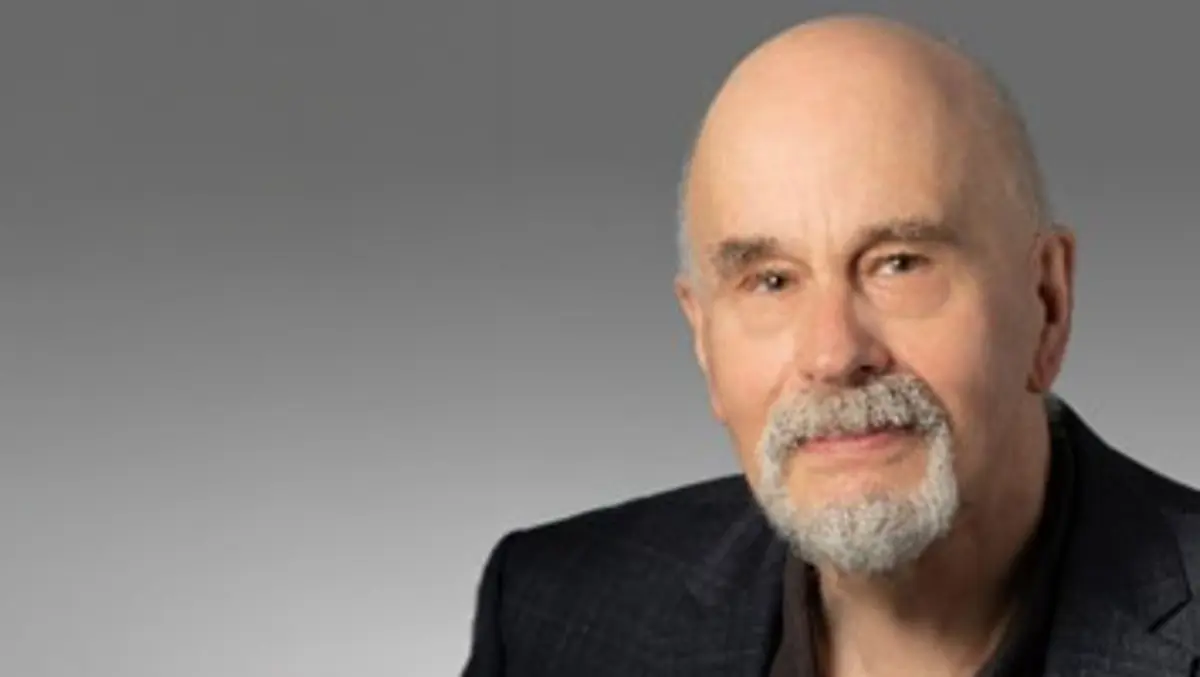
Calderbank wins Marconi Prize for digital communications
Tue, 24th Nov 2026 (Today)
Robert Calderbank has received the 2026 Marconi Prize, which recognises his work in digital communications.
He was honoured at a gala in San Francisco for contributions to voiceband modem technology, which helped shape modern telecommunications and supported the early growth of the internet. He is also known for work on space-time coding and quantum error correction.
The Marconi Prize is one of the communications sector's most established awards, covering fields including wireless, mobile, telecommunications, data networks and the internet. Calderbank is Charles S. Sydnor Distinguished Professor of Computer Science at Duke University.
In his acceptance speech, he pointed to the people who influenced his career. "This is a time when I get to remember all the people that have made me more successful. I am very grateful to them," Calderbank said.
Calderbank's recognition reflects the continuing importance of the technologies that underpinned the first era of mainstream digital connectivity. Voiceband modem technology played a central role in allowing data to travel over telephone lines, making internet access possible for households and businesses before broadband became widespread.
His later work in space-time coding and quantum error correction also spans two areas that remain influential in communications research. Space-time coding has been important in wireless system design, while quantum error correction is central to efforts to make quantum information systems reliable.
The awards ceremony opened with a tribute to Guglielmo Marconi, presented by H.E. Marco Peronaci, Ambassador of Italy to the United States; Dr. Donata Paresce, a descendant of Guglielmo Marconi and great-niece of Gioia Marconi Braga; and Giulia Fortunato, President of the Fondazione Guglielmo Marconi and President of the Italian National Committee Marconi.
The Marconi Society was founded in 1974 by Gioia Marconi Braga, daughter of Guglielmo Marconi. It focuses on individuals working on communications technology linked to global connectivity and sustainability. Its current institute structure spans AI, internet resilience and advanced wireless.
The Marconi Society also presented its Marconi Lifetime Achievement Award to John L. Hennessy, Co-founder and Director of the Knight-Hennessy Scholars Program. The award recognised a sustained commitment to using technology and education in service of others.
Hennessy used his remarks to focus on the next generation of researchers. "The thing about a Lifetime Achievement Award is it recognizes a long career," he said. "But it's also a message. It's a message that it's time to let the young people come in. My congratulations to the Young Scholars. It's up to you to really carry our field."
Three Institute Awards were also presented. Dr. David Bray of the People-Centreed Internet Coalition was recognised for Excellence in Artificial Intelligence, Dr. Pierrette Renée Dagg of Merit Network for Leadership in Internet Resilience, and Dr. Hamid Jafarkhani of UC Irvine for Innovation in Wireless Communications.
The Society also recognised three Paul Baran Young Scholars for 2026: Malek Itani of the University of Washington, Atsutse Kwami Kludze of Princeton University and Yiwen Song of Carnegie Mellon University. The program highlights early-career researchers whose work shows strong promise.
Alongside the awards, the event brought together the Marconi Society's three institutes - Advanced Wireless, Artificial Intelligence and Internet Resilience - for a cross-sector forum. This was the first time the three institutes had met together in that format.