

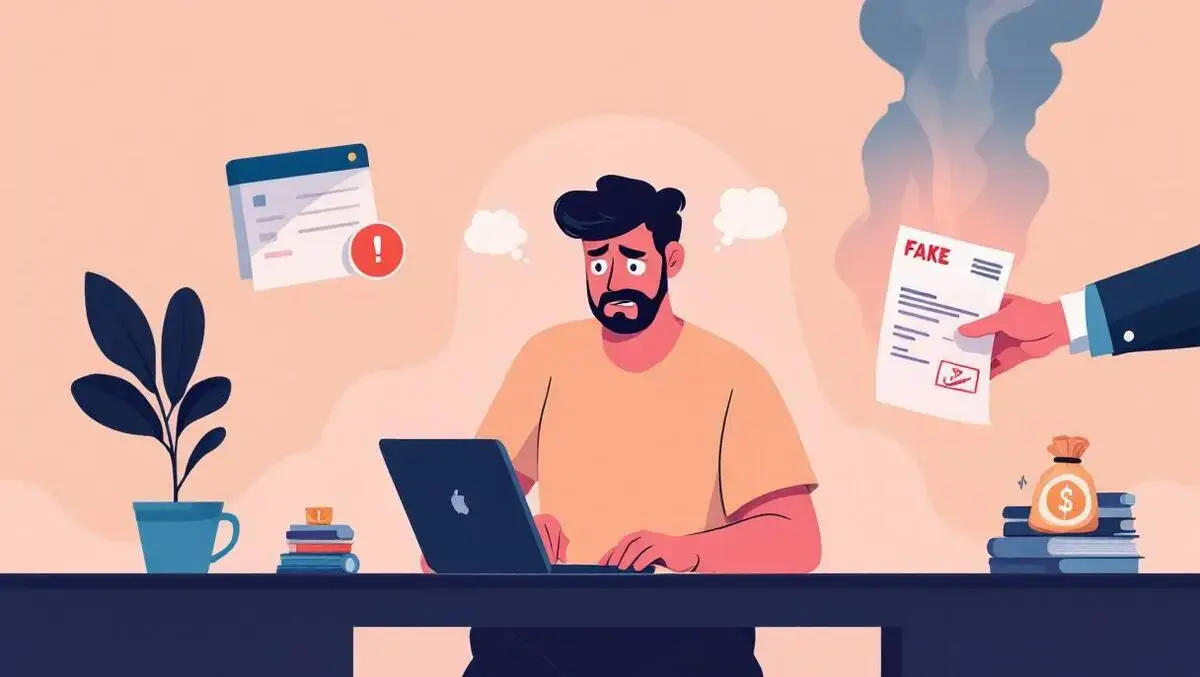
Scam losses more than double as fraud hits consumers
Mon, 11th May 2026.webp)
F-Secure has published research showing that scam losses have more than doubled, with fraud affecting more than half of consumers. Nearly 40 million people in the United States were affected over the past year.
The findings show that 56% of consumers encountered scam attempts at least monthly, while 52% of victims lost money. That is more than double the rate recorded a year earlier, when 19% of consumers reported being scammed.
The research also points to a shift in the types of fraud causing the greatest financial harm. Fake invoice scams accounted for 20% of the most damaging incidents, followed by investment scams at 19% and banking or payment fraud at 11%.
The change suggests criminals are focusing on higher-value fraud rather than simply increasing the number of people they target. The report also says artificial intelligence and organised crime are making scams easier to scale and harder for consumers to spot.
Dr Megan Squire, Threat Intelligence Researcher at F-Secure, said the data showed a sharper and more efficient criminal approach. "Scams are getting so much more efficient. Criminals are choosing their targets more carefully and closing in faster," said Dr Megan Squire, Threat Intelligence Researcher, F-Secure.
She also highlighted the human impact behind the figures.
"When you look at this data, it's important to remember that each statistic is a real person who has lost money, confidence, or peace of mind. The financial losses we're seeing now are a clear signal that the threat has fundamentally changed," said Squire.
Age split
F-Secure's report found a clear divide in how different age groups experience fraud. Younger adults faced more scam attempts, but older victims were more likely to lose money when targeted.
Among victims aged 65 to 74, 60% said they had lost money, making older consumers one of the groups most likely to suffer financial harm once a scam succeeded.
The figures come as digital services play a larger role in banking, shopping and communication, increasing the number of points at which consumers may encounter fraud. They also suggest scam prevention is becoming a broader consumer issue rather than a niche cyber security concern.
Trust pressure
Security concerns are increasingly shaping consumer choices about service providers. The findings show that 93% of consumers said it matters that their provider offers cyber security, while 82% said security affects which provider they choose.
Another 69% said they would switch providers based on the security on offer. F-Secure also found that 51% of consumers were willing to pay for scam protection.
Those figures point to a commercial impact for telecoms groups, banks and other digital service providers that rely on customer trust. As fraud becomes more convincing, security features are moving closer to the centre of customer retention and acquisition.
Timo Laaksonen, President & CEO at F-Secure, said the changes were affecting both consumer behaviour and the wider fraud landscape.
"The trust crisis is accelerating on two fronts: consumer behavior and the evolving threat landscape. As AI increasingly shapes both how decisions are made and how scams are carried out, it's becoming harder for people to distinguish what's real from what's not," said Timo Laaksonen, President & CEO, F-Secure.
He said the industry needed to adapt.
"That shift demands a move beyond traditional protection toward building true resilience and trust across the entire digital experience. Aside from being the 'right thing' to build, trust is now a provider's biggest growth driver," said Laaksonen.
F-Secure's study adds to growing concern across the cyber security sector that fraud is becoming less about mass disruption and more about extracting larger sums from selected victims. The combination of more persuasive scam methods, wider use of AI tools and persistent consumer exposure suggests the economics of online fraud are shifting in criminals' favour.
For consumers, the report's figures suggest a threat that remains widespread even if exposure is no longer rising. For companies selling digital services, they show that security has become a factor in whether customers stay or leave, with 69% saying they would switch providers based on the security offering.