

Software-defined vehicles now top priority for carmakers
Thu, 15th Jan 2026
Software-defined vehicles have become the leading strategic priority for automotive OEMs and suppliers, overtaking advanced driver-assistance systems and electric vehicles, according to new research from IoT Analytics.
The firm said 45% of automotive OEMs and suppliers now rank the transition to software-defined vehicles as their number one strategic priority. The findings draw on a survey of more than 80 automotive OEMs and suppliers, alongside expert interviews.
"Our research indicates the shift to software-defined vehicles is now a top technology priority for automotive OEMs. Tesla, Rivian, and several Chinese OEMs are moving fastest, while many incumbents still face major architectural and organizational gaps," said Knud Lasse Lueth, CEO, IoT Analytics.
Architecture shift
The research points to a structural change in vehicle electronics and software architecture. OEMs have moved away from distributed or domain-based systems, with the report describing a broad push towards zonal designs.
IoT Analytics said more than 90% of automotive OEMs have committed to zonal architecture. It added that 80% have already started the migration.
The report describes consolidation into centralised or advanced zonal architectures. It links the shift to reduced wiring complexity and lower vehicle weight. It also links the change to manufacturing efficiency.
Cloud strategy
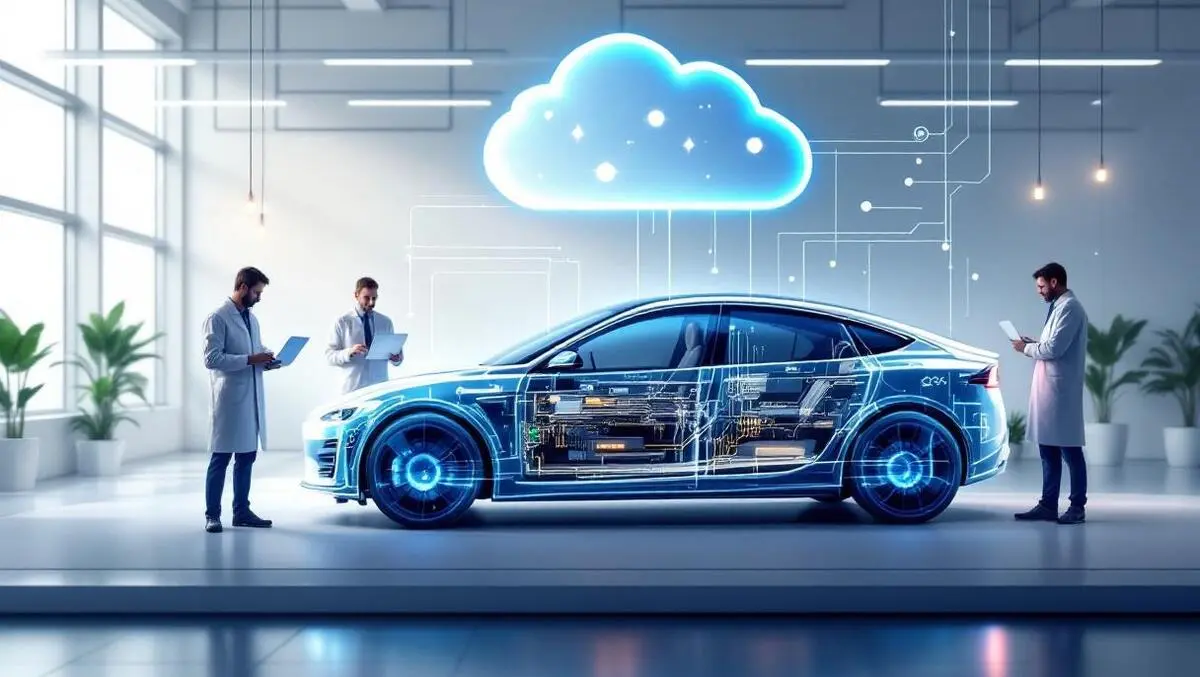
IoT Analytics also highlighted the role of cloud integration in software-defined vehicle programmes. The firm said vehicle-to-cloud integration acts as a critical element in software-defined vehicle approaches.
Over-the-air updates sit at the centre of that integration. IoT Analytics said 73% of OEMs and 71% of suppliers identify over-the-air updates as the top role for cloud integration.
Security concerns continue to shape cloud deployment decisions in the automotive sector. IoT Analytics said 91% of OEMs expect critical software workloads to remain on on-premises servers or in a private cloud, rather than in public cloud environments.
The findings arrive as carmakers expand connected services and attempt more frequent software releases across model lines. Over-the-air software distribution has become a mainstream feature in newer vehicles. It also creates an ongoing operational burden, which includes monitoring, patching and validation across a mixed fleet.
Different speeds
The research describes uneven progress between vehicle makers. It identifies technology-led manufacturers and several Chinese OEMs as faster movers in the transition.
IoT Analytics named Tesla and Rivian, alongside BYD and NIO, as top innovators in the field. It said these companies use software-first architectures and develop new models faster than legacy peers.
The report positions architecture choices and internal execution as key differentiators in adoption speed. It also highlights the importance of aligning product development and software release cycles. That alignment has proved difficult for long-established manufacturers with complex supply chains and long model cycles.
Skills and culture
IoT Analytics said the shift towards software-defined vehicles also creates organisational pressure. The report describes cultural and skill-based hurdles as a significant part of the transition.
The firm said 18% of OEMs cite insufficient internal skills as a key challenge. It added that companies increasingly use generative AI in software development and validation phases.
One analyst at IoT Analytics said the shift extends beyond vehicle software features and into engineering practices. "The SDV transition isn't just about the in-vehicle applications; it's about Software-Driven Engineering. By integrating cloud-based compute and AI into the design phase including designing vehicle architectures, OEMs can scale the AI training necessary to move from software platforms currently used in SDVs to fully autonomous AI-Defined Vehicles (AIDV)," said Harsha Anand, Senior, IoT Analytics.
The findings place software-defined vehicle programmes alongside broader efforts to change how cars get designed, tested and maintained after sale. The report also suggests that the next stage of competition will hinge on the ability to manage large software codebases, system integration and security across an extended vehicle lifetime.
IoT Analytics said many incumbents still face architectural and organisational gaps as they attempt the transition.