

Cato launches AI threat prevention for cyber attacks
Tue, 4th Aug 2026
Cato Networks has launched Cato Agentic Threat Prevention, a product aimed at AI-assisted cyber attacks.
The offering uses autonomous security agents to predict likely attack paths and apply protections tailored to each customer environment before an attack progresses.
Cato positions the launch as a response to a shifting threat landscape, in which attackers use artificial intelligence to identify vulnerabilities, build exploits and run campaigns at a speed that outpaces manual security operations. Traditional tools and human-led workflows, it argues, struggle when attacks can move from discovery to exploitation within hours.
The system draws on network and security telemetry within Cato's cloud-based platform to build a single view of users, applications, traffic patterns, assets and exposures. That shared context allows its AI agents to model risk in a customer environment, assess how attackers may link techniques together and generate protections designed for that specific setting.
Those protections can be enforced across Cato's global network of points of presence, aiming to avoid gaps between different security controls.
Faster response
The launch accompanies Cato's Agentic CVE Mitigation technology, which can assess and apply protections for newly disclosed vulnerabilities in as little as 45 minutes. Together, the two functions are intended to address the period between a vulnerability being exposed and a defence being put in place, which Cato sees as a key advantage for AI-assisted attackers.
That focus reflects a broader cyber security concern that automation is changing both the speed and scale of attacks. Cato says AI-driven attackers can scan large numbers of environments at once, tailor campaigns to individual targets and operate continuously without direct human oversight.
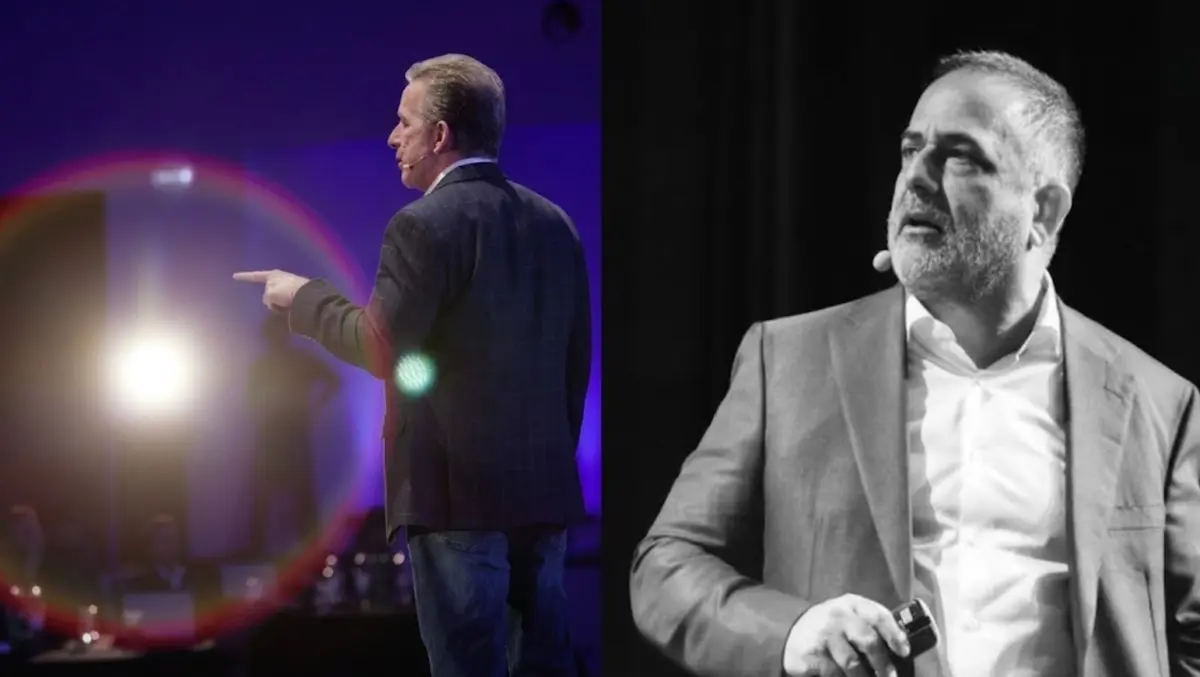
Shlomo Kramer, Co-Founder and Chief Executive Officer of Cato Networks, said the shift requires a different security model.
"Yesterday's security cannot stop today's AI-powered attacks. Prediction is the new prevention. The only way to stay ahead of AI-powered attacks is to anticipate where they'll go next and deploy protections before damage is done. It's high time we level the playing field, and that's precisely what we're doing with Cato Agentic Threat Prevention," Kramer said.
Industry view
Industry analysts have also pointed to the pressure AI places on security teams, particularly where organisations still rely on separate products and manual investigation. In such environments, defenders may need more time to examine an alert than an attacker needs to complete an intrusion path.
Frank Dickson, Group Vice President at IDC, said: "AI-assisted attacks are exposing the limits of static security controls and manual response. An entire attack can require less time than is required to investigate an alert. As attackers adapt faster and tailor campaigns to each environment, enterprises will need prevention approaches that use shared context, automation, and cloud-scale enforcement to reduce exposure before compromise occurs."
Cato says its approach is designed to move prevention earlier in the attack cycle, rather than waiting for a known threat to be detected after activity has started. By combining customer-specific activity with broader threat intelligence, it aims to create protections based on how an attack may unfold in a given environment instead of relying on standardised detections alone.
The announcement also reflects a growing push among cyber security suppliers to weave more autonomous decision-making into their products. The trend has accelerated as businesses face larger volumes of security data, more complex hybrid environments and a shortage of specialist staff to monitor and respond around the clock.
For buyers, the challenge will be whether such systems can make reliable decisions quickly enough to reduce risk without causing unwanted disruption. Automated protection has long been part of cyber defence, but vendors are now trying to extend it beyond narrow tasks into broader judgement about how attacks might develop and which controls should be applied first.
Cato argues that unified visibility across networking and security gives those automated systems a stronger basis for making such decisions. By using a single data lake and platform-wide context, its agents can map multi-stage attack paths more accurately and adapt protections as conditions change.
The launch underlines how cyber security companies are reframing their products around anticipation as much as detection. As attackers make greater use of AI to compress the time between reconnaissance and exploitation, vendors are increasingly trying to convince customers that preventive automation, rather than post-alert response, will define the next phase of enterprise defence.
Cato says its new product creates "protections tailored to each customer's environment rather than relying on one-size-fits-all detections".